Art & Culture Lab
The studio practice underneath the direction. Painting, printmaking, and digital work rooted in Afro-Caribbean and Afro-Latin storytelling — and in the wider diaspora those traditions travel through.
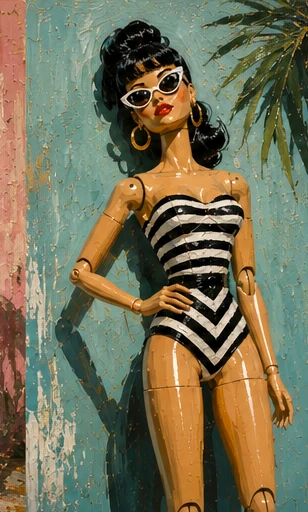
Dolled Up Legacy paints women as what the world keeps asking them to be: beautifully dressed, perfectly posed, and jointed at every limb. Each figure is an artist's mannequin — ball joints at the knee, the elbow, the shoulder — wearing mid-century glamour against sun-bleached Caribbean walls. The styling is 1950s pin-up, the decade that industrialized the ideal woman and sold her back to herself. But the seams show on purpose. A doll is posable: someone else decides how she sits, where she looks, what she wears. That is the legacy in the title, and it did not end with the decade. Across the globe women are still measured by silhouette before sentence, still assembled from parts, still expected to hold the pose — in advertising, in politics, in the street. I painted them gorgeous because the gorgeousness is real and the cost is also real. Look long enough and you see the joints — and once you see them, you cannot unsee who has been doing the posing.
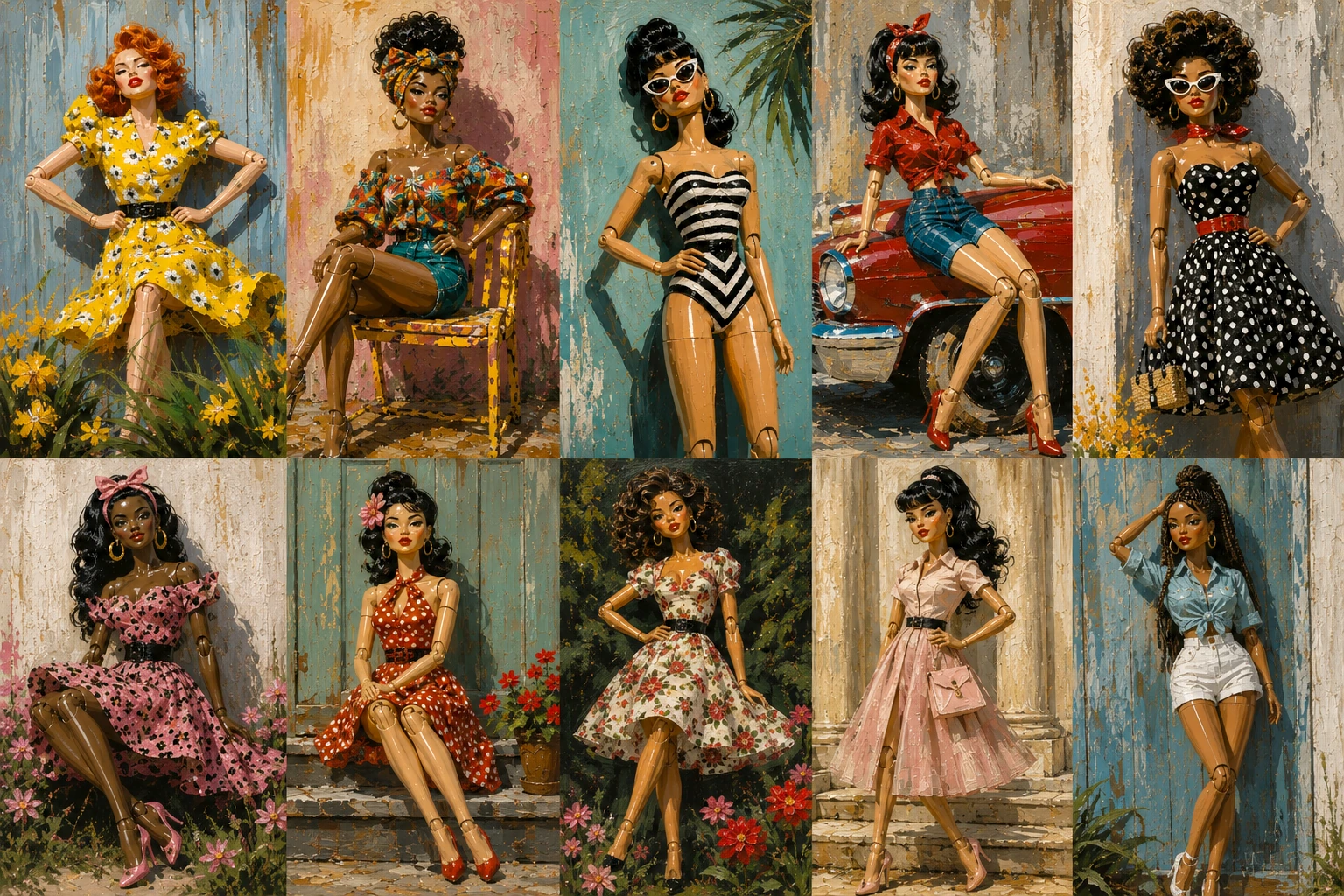
Daisy Field
The Yellow Chair
Striped Maillot
Red Convertible
Polka & Straw
Pink Bow
Carnation Steps
Garden Bloom
The Colonnade
Blue Door
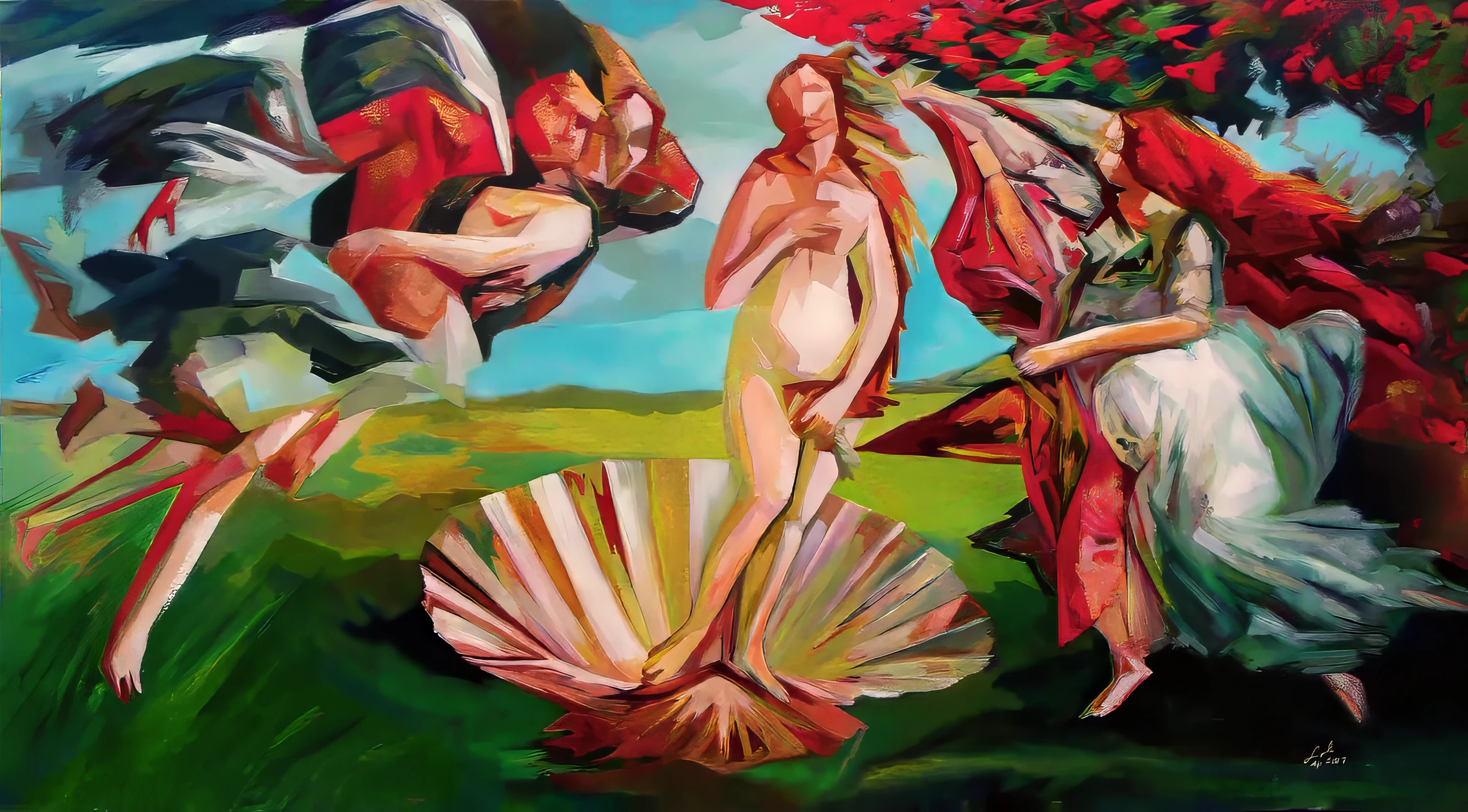
Botticelli gave Europe a goddess arriving on a shell, blown ashore by the west wind and met with a cloak. Caribbean Venus, Caribbean Queen asks a simple question of that painting: who was allowed to be born beautiful, and who was left out of the frame? Here Venus comes ashore on our water. The scallop becomes a conch, the zephyrs become trade winds, and the goddess is a Black and brown woman carrying the poise the canon reserved for marble. I work her through several languages at once — the painterly master study, cubist facets that break her into planes of gold and teal, pop-art saturation, and surrealist stillness where doves and roses hold the horizon. The shifting styles are the point: a queen does not have one portrait. She survives translation. Venus was never only Florentine — she was always going to reach these shores, and when she did, she arrived crowned.
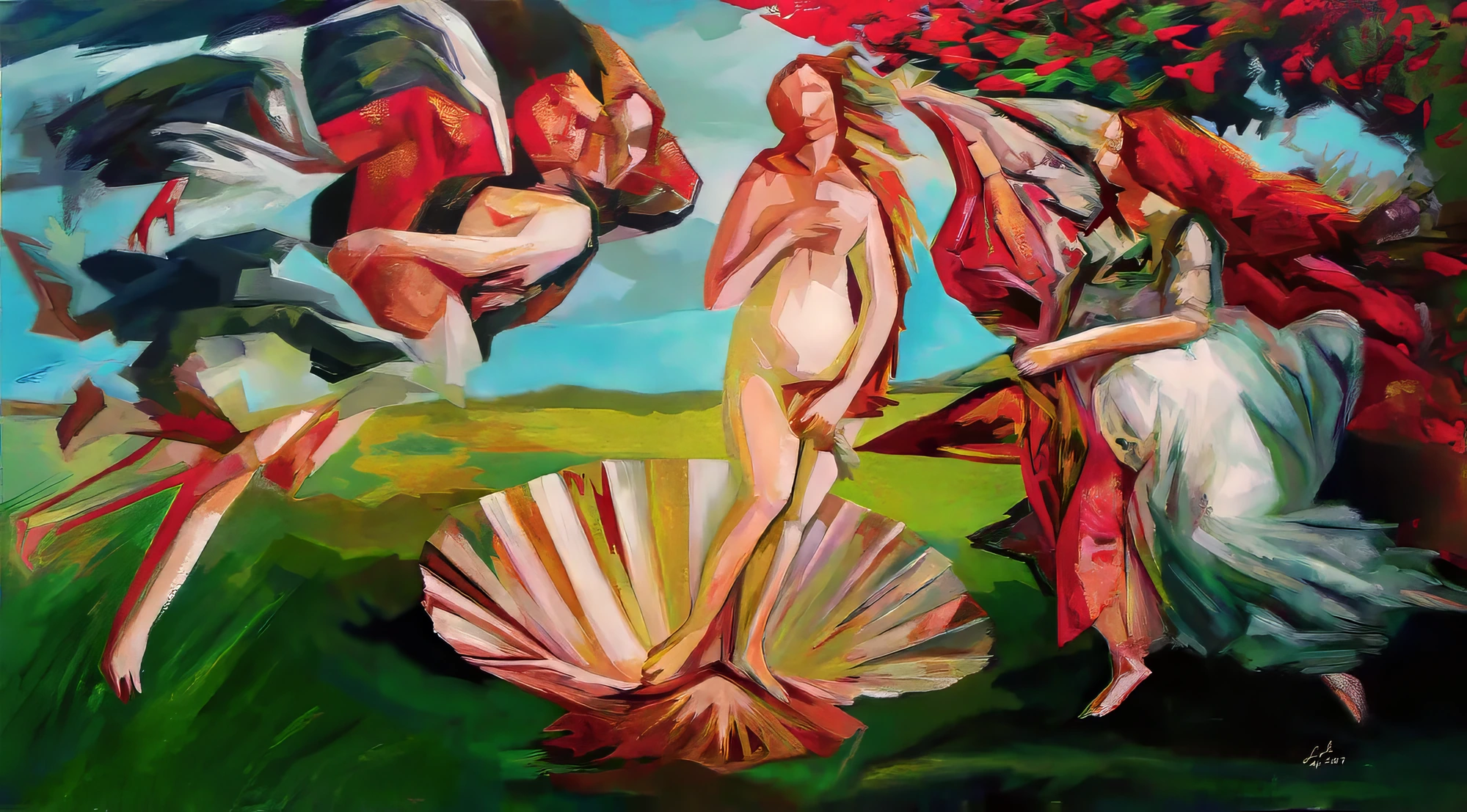
Caribbean Venus — the master painting
Birth study — the shell and the shore
Venus and the doves
Venus in pop — tulip and flask
Venus of the reef
Faceted Venus I
Faceted Venus II
Venus ascending
Venus of the Coral Fan
Venus Emerging — the shell crown
Venus in Profile
Venus of the Vessel
Venus of the Shore
Venus and the Rising Sun
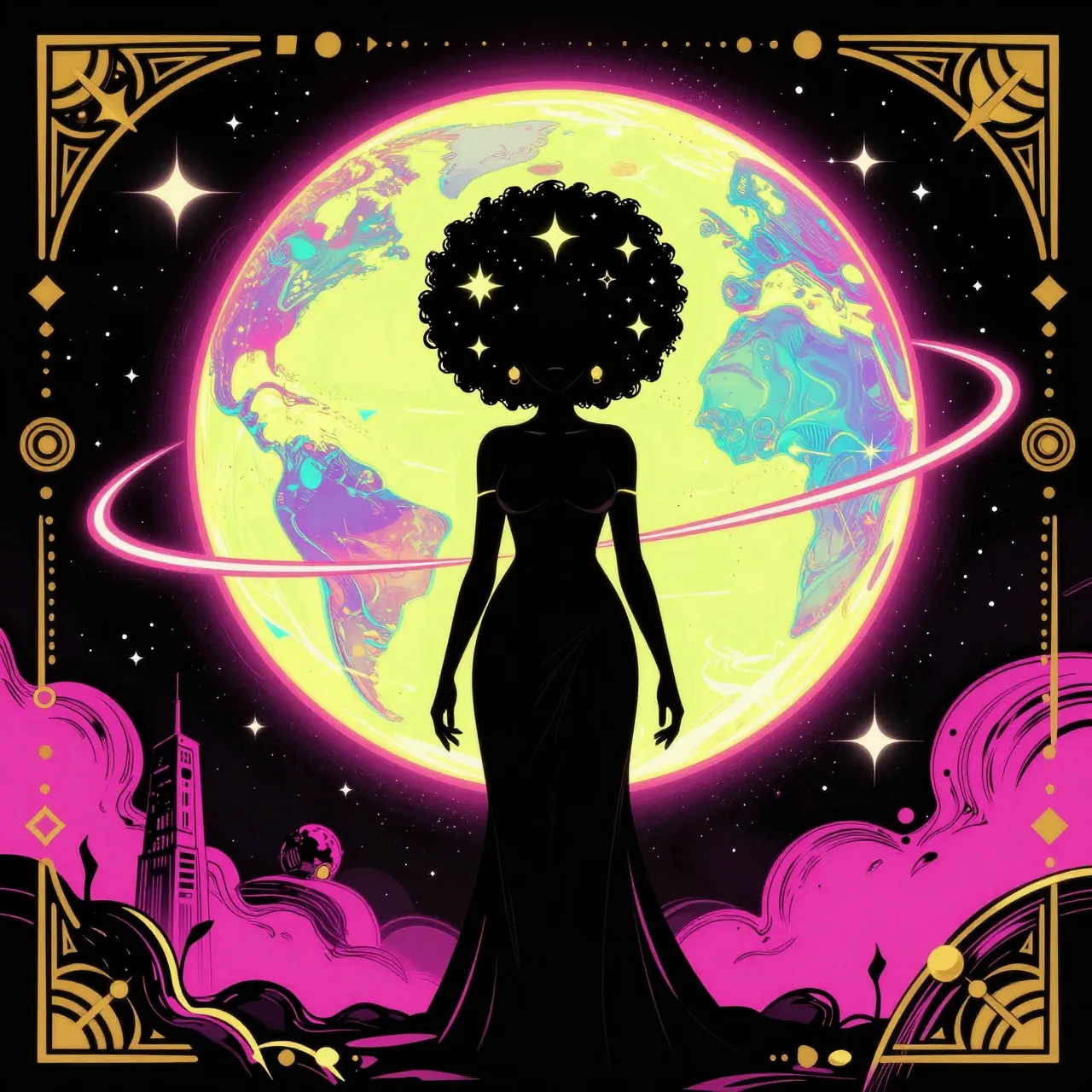
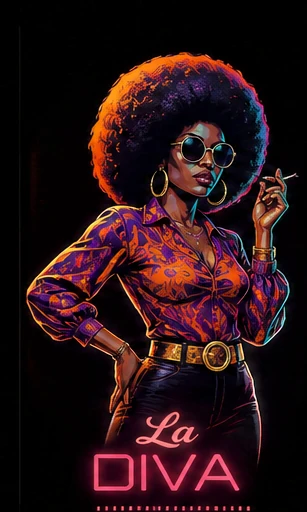
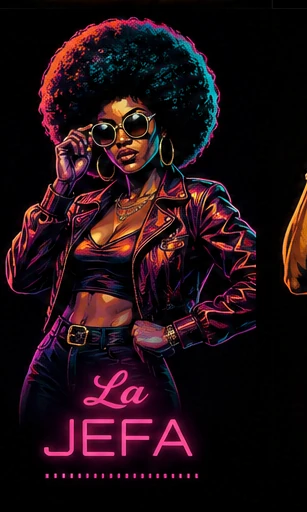
Afrolatinidad Es began as a question with no single answer: what does Afro-Latin actually look like? So I drew ten answers and lit them like a night marquee. Abuelo Chingón, La Diva, El Playero, La Bomba, Don Fresco, El Filósofo, La Hechicera, El Rastro, La Jefa, Don Sabroso — each one is a character the diaspora already knows, named the way we actually name people, with Don and Abuelo and La carrying respect and affection in the same breath. The styling is deliberately out of one time and one place. The clothes come from the 1970s, the decade when Black self-definition became something you could wear: wide collars, psychedelic paisley, leather, suspenders, high-waisted denim, gold at the wrist and the ear. The hair carries its own history — the afro of Black Power, dreadlocks out of Rastafari, the head wrap that crossed the Atlantic, the beret, the rasta tam, the newsboy cap. None of it is Caribbean alone; the Caribbean is simply where these lines happened to meet. The color is the argument. Every figure is lit in afrofuturist neon and cyberpunk signage — magenta, cyan, lime and amber against black — because heritage does not belong to the past tense. Afrolatinidad is not a costume borrowed from a decade. It glows, and it is still being written.
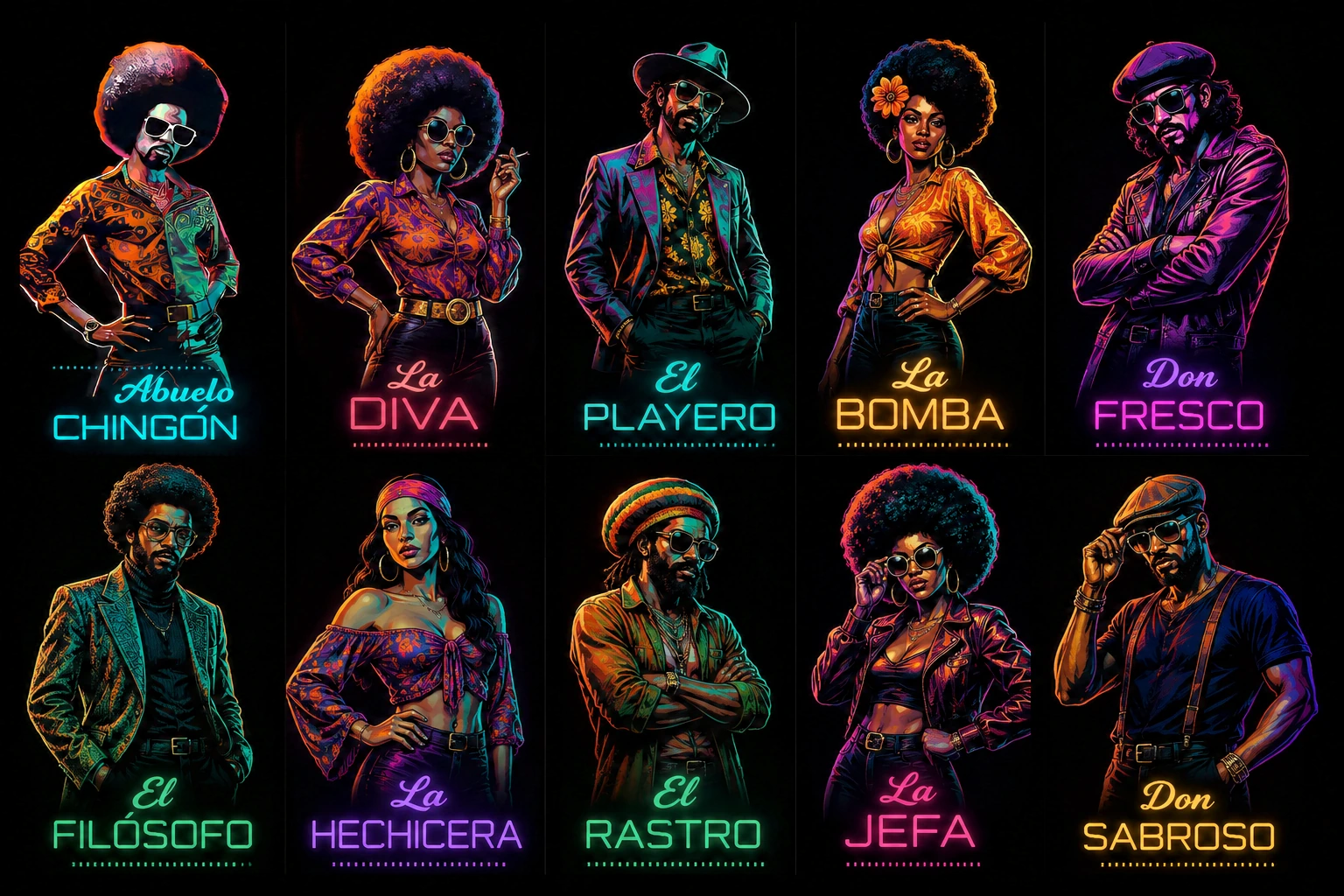
Abuelo Chingón
La Diva
El Playero
La Bomba
Don Fresco
El Filósofo
La Hechicera
El Rastro
La Jefa
Don Sabroso
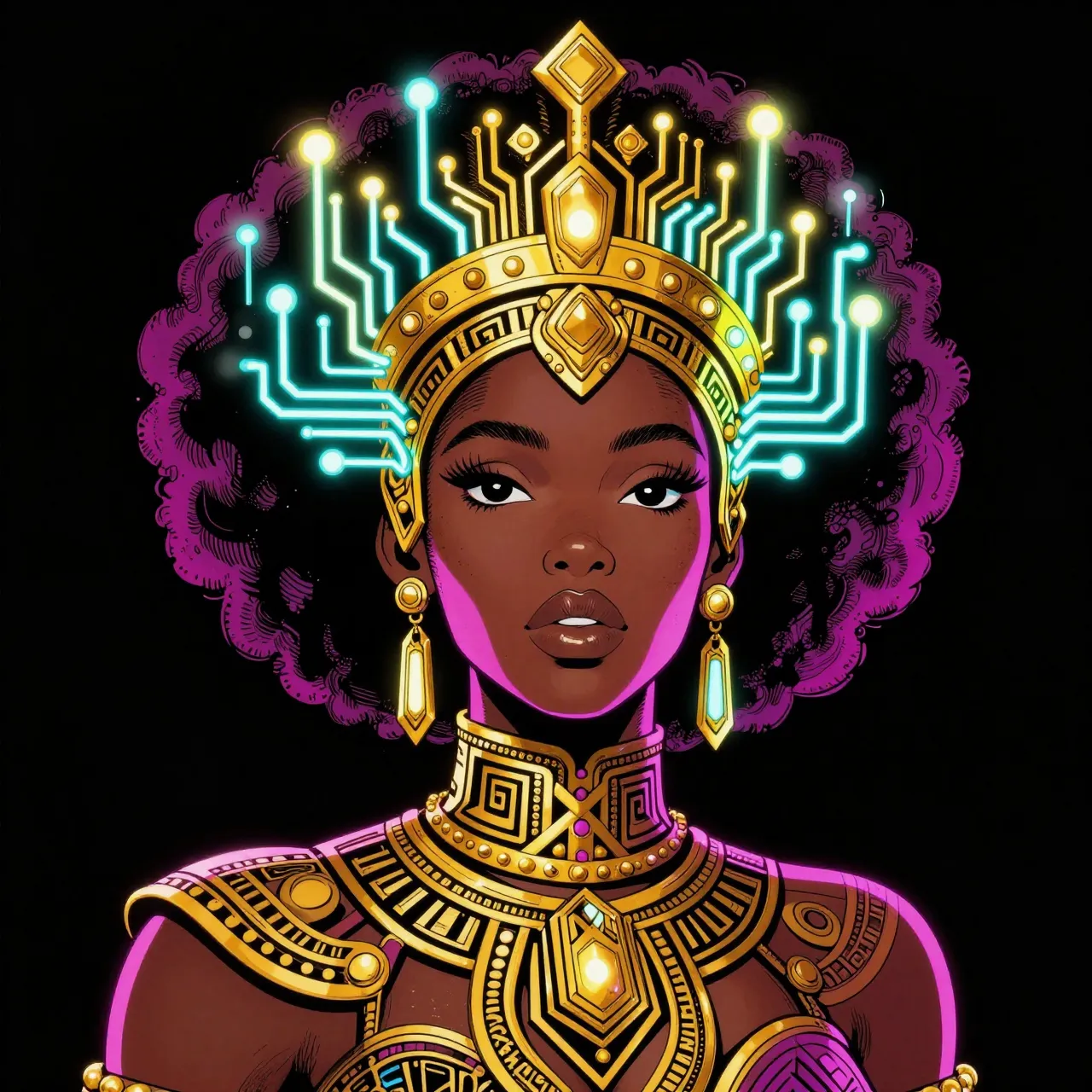
Cyberpunk Times began with an obsession with light. Digital art lets color emit instead of reflect — it glows rather than sits — and cyberpunk is the language built for that luminosity. I took that electric, after-dark palette and handed it to people who rarely get to stand at the center of the future. Each figure is a woman drawn from a different culture — Yoruba, Quechua, Korean, Amazigh, Ethiopian, Persian, and more — crowned in neon and gold, rendered in bold graphic-novel line and flat cel color. Around them I build Afrofuturist worlds: cities of domes and pyramids, night markets, cosmic goddesses with hair made of stars. This is not nostalgia for any single tradition; it is a claim on tomorrow. Heritage and high technology are not opposites — in this series they share the same glow, proof that the future is most beautiful when everyone is lit up inside it.
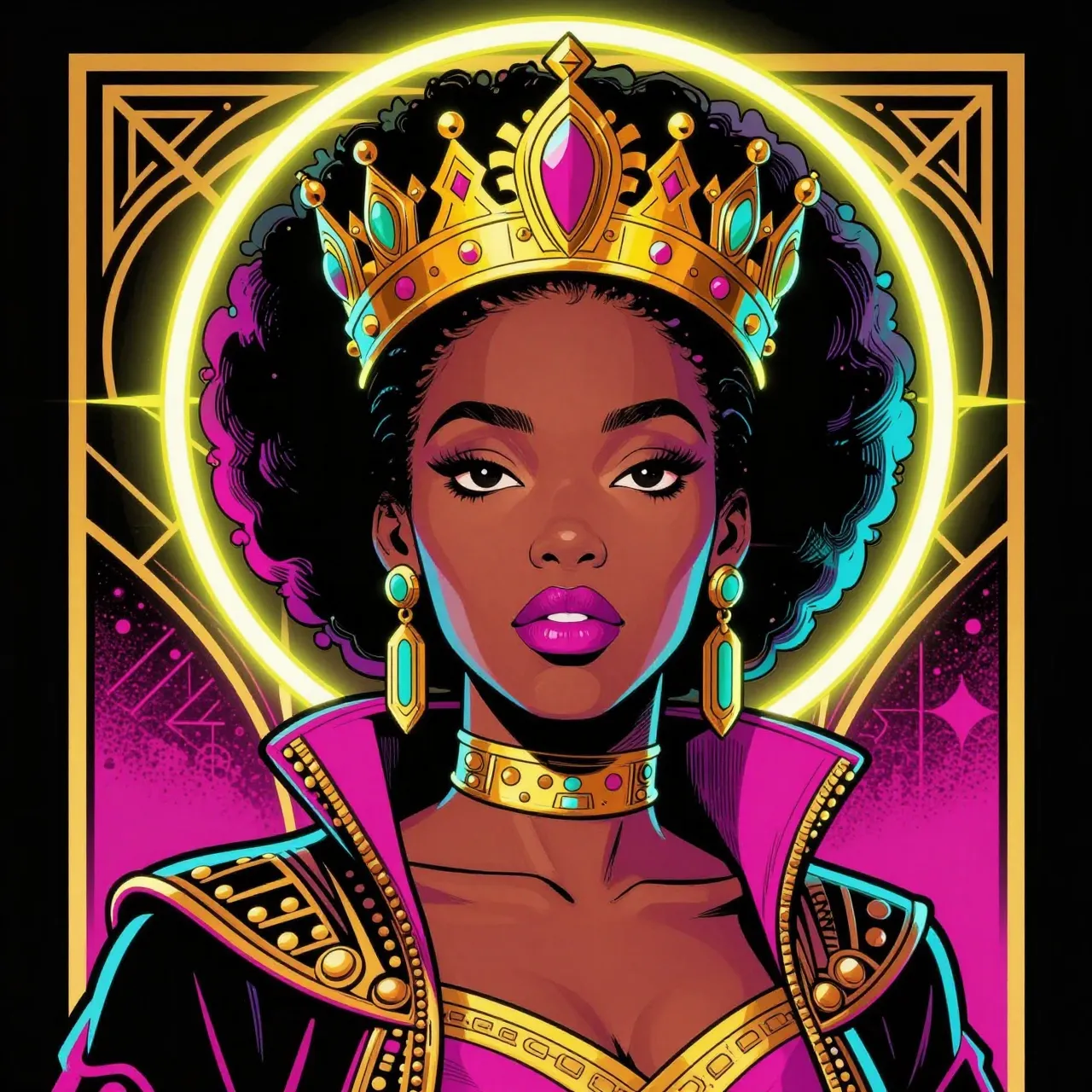
Gold Circuit Crown
Neon Braids
Cyber Hanfu
Luminous Henna
The Geometry Veil
Fiber-Optic Feathers
Chrome Mohawk
Bloom & Ink
City of Gold Domes
The Night Market
Star-Crowned
Pyramids & Spires
Cowrie Crown
Cross & Gold
Neon Locs
Urucum Light
Luminous Hanbok
Baybayin Sun
The Calligraphy Veil
Silver & Ink
Dreaming in Dots
Woven Frequencies
Throne of Light
Moonlit Caravan
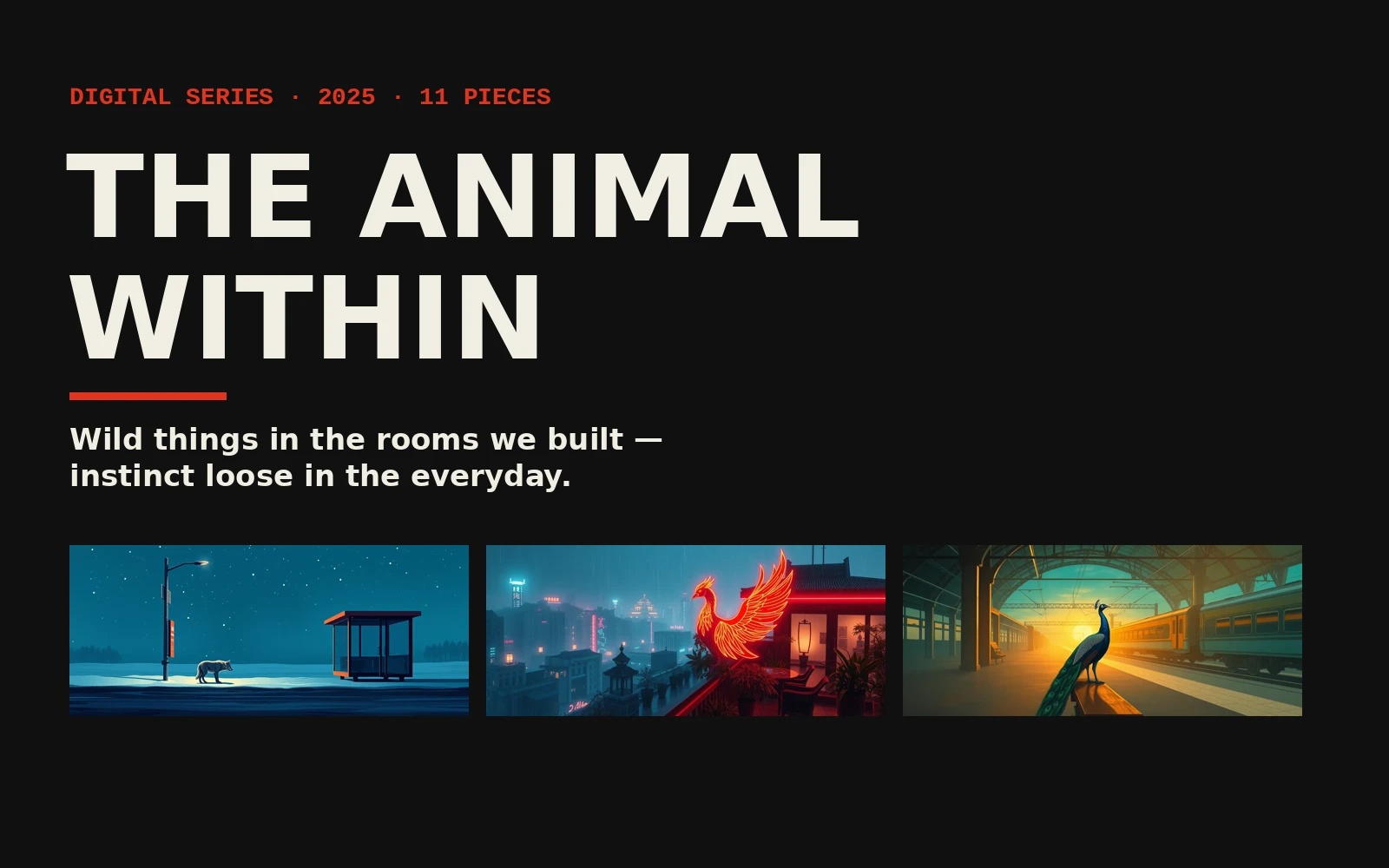
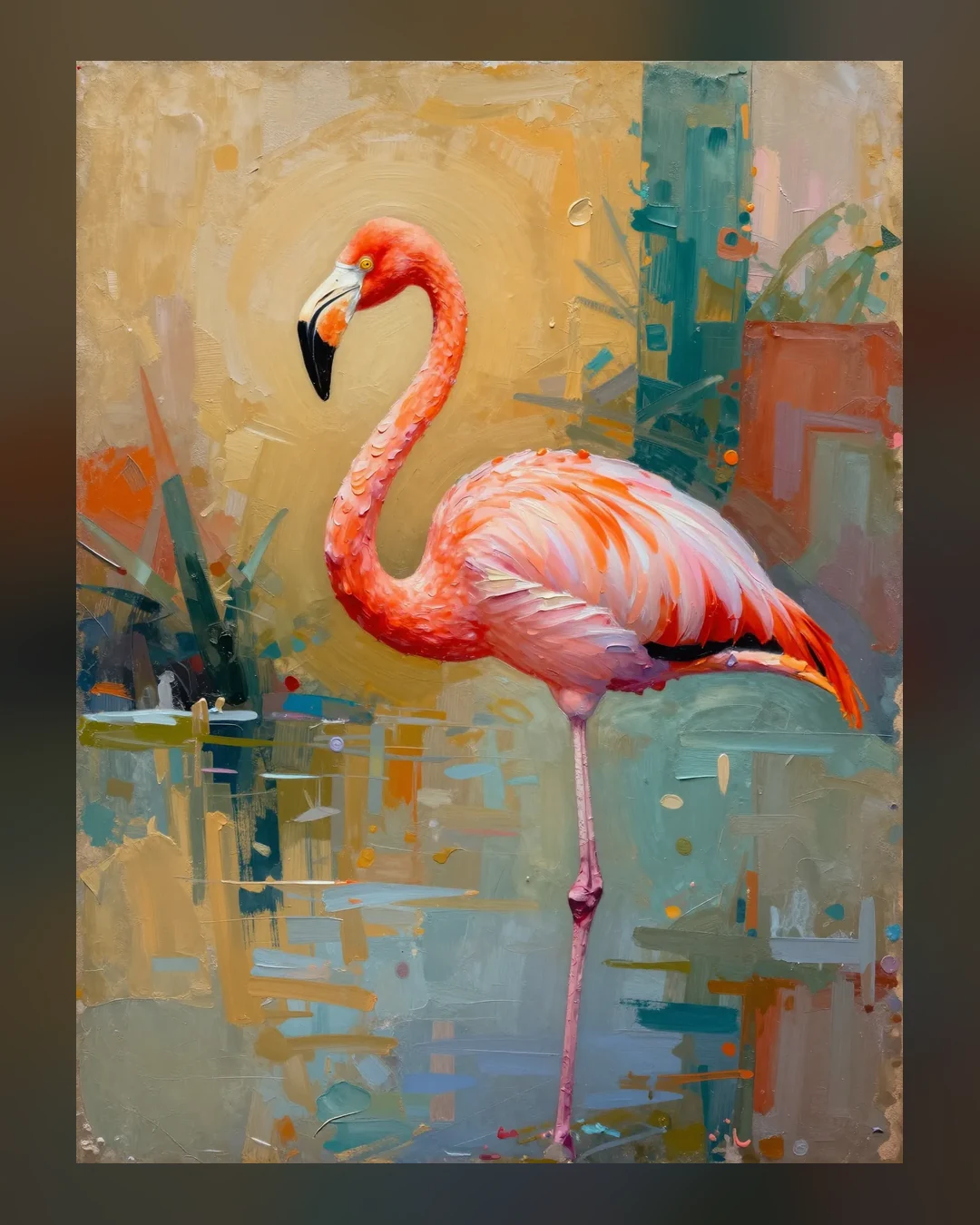
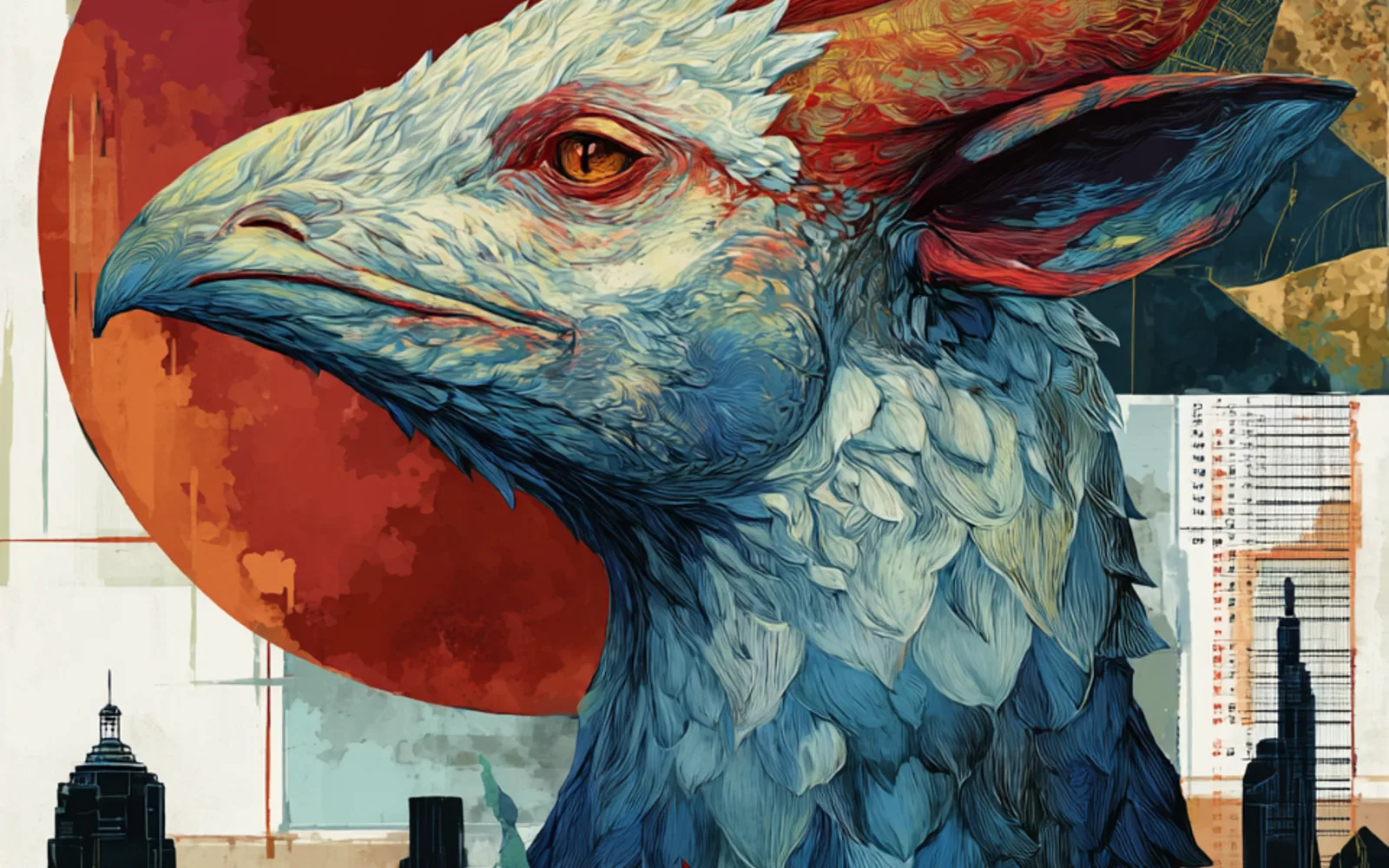
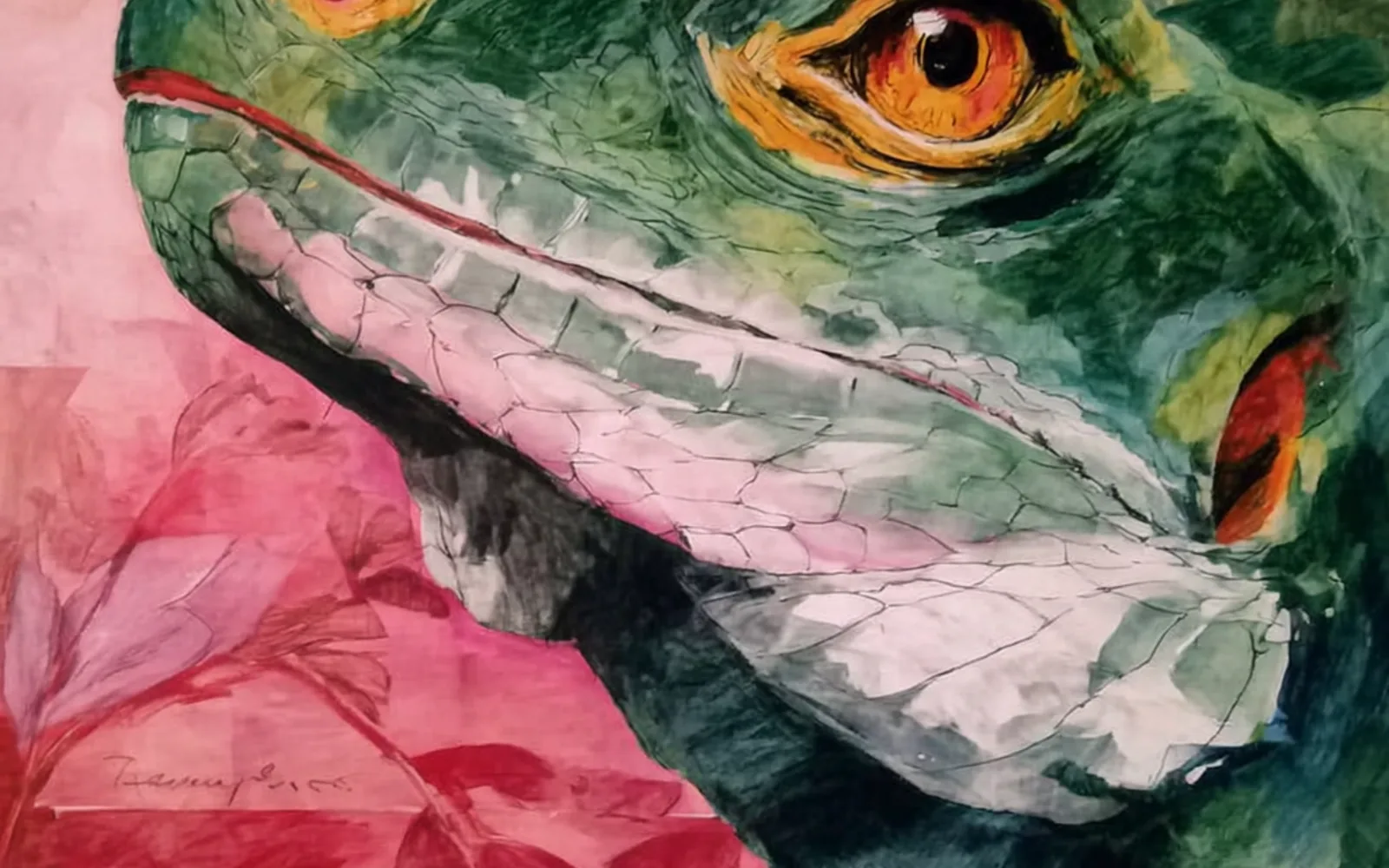
Animalia Caribe is my love letter to the creatures of the islands, painted the way the Caribbean actually feels — hot, saturated, alive at the edges. I work each animal in mixed media, letting oil, acrylic, and watercolor argue on the surface so the paint stays physical: thick palette-knife ridges, drips, a background that fractures into pure color. The coquí, the flamingo, the iguana, the manatee, the tody, the gallo — guardians and messengers of island folklore — emerge out of that abstract ground rather than sit in front of it, so subject and world share the same charged brushwork. The palette is fixed on purpose: gold ochre and burnt orange against deep teal, with a vivid magenta note running through the series like heat. It is fauna as feeling — the Caribbean not observed from outside, but painted from inside its own light.
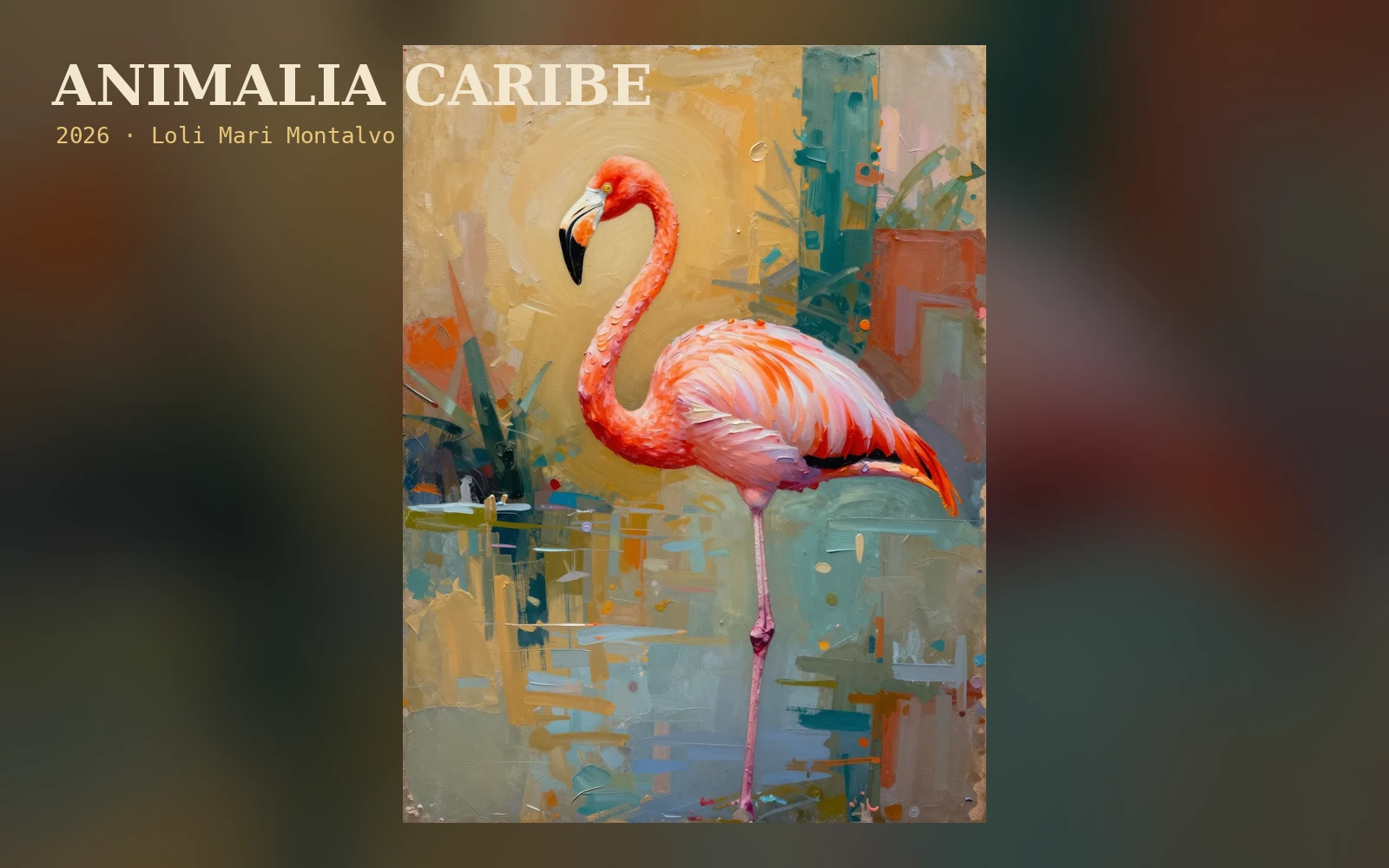
Coquí
Caribbean Flamingo
Green Iguana
Antillean Manatee
Crested Hummingbird
Rainbow Parrotfish
Brown Pelican
Hawksbill Turtle
Blue Land Crab
Puerto Rican Tody
Puerto Rican Boa
Criollo Rooster
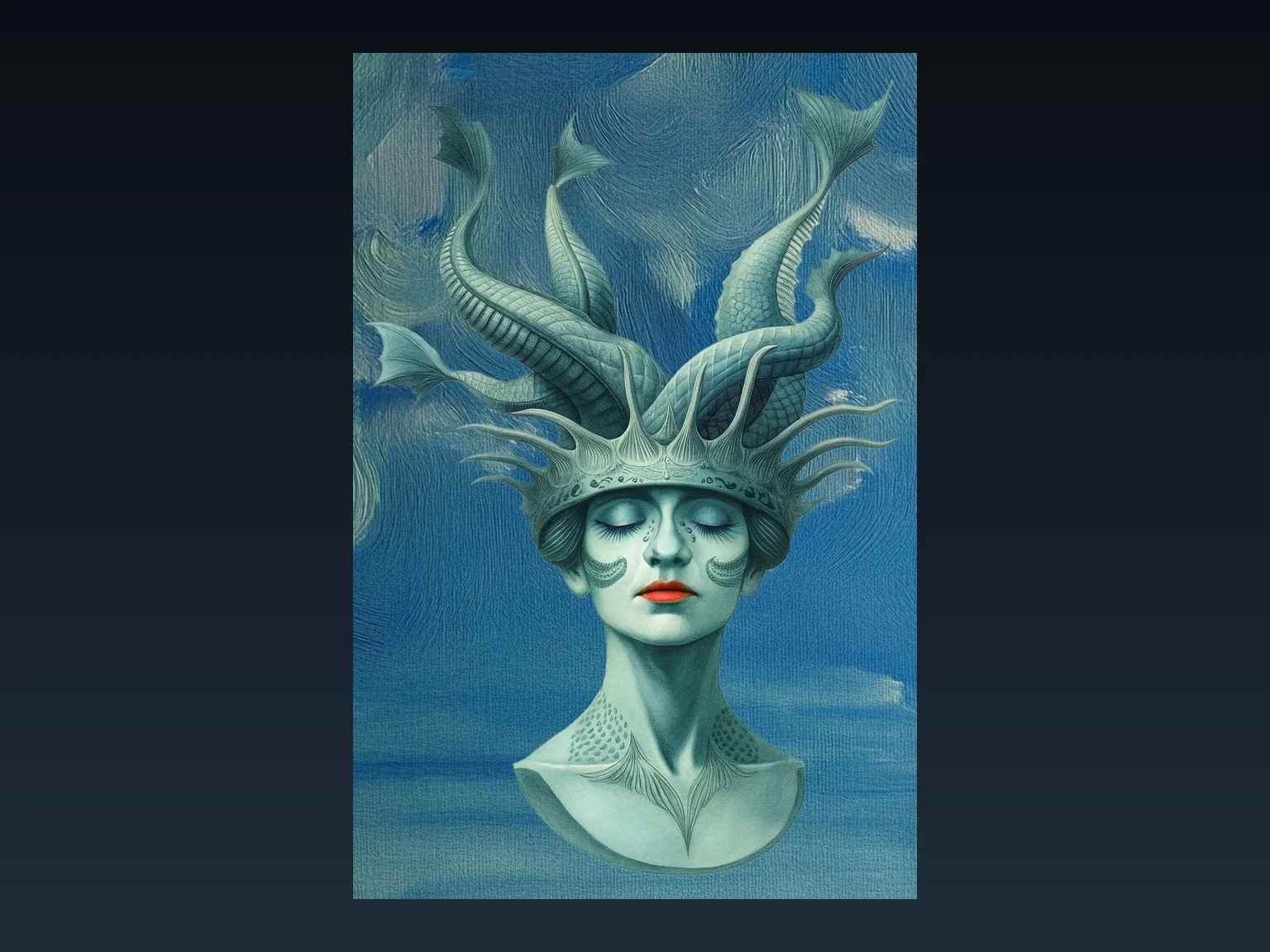
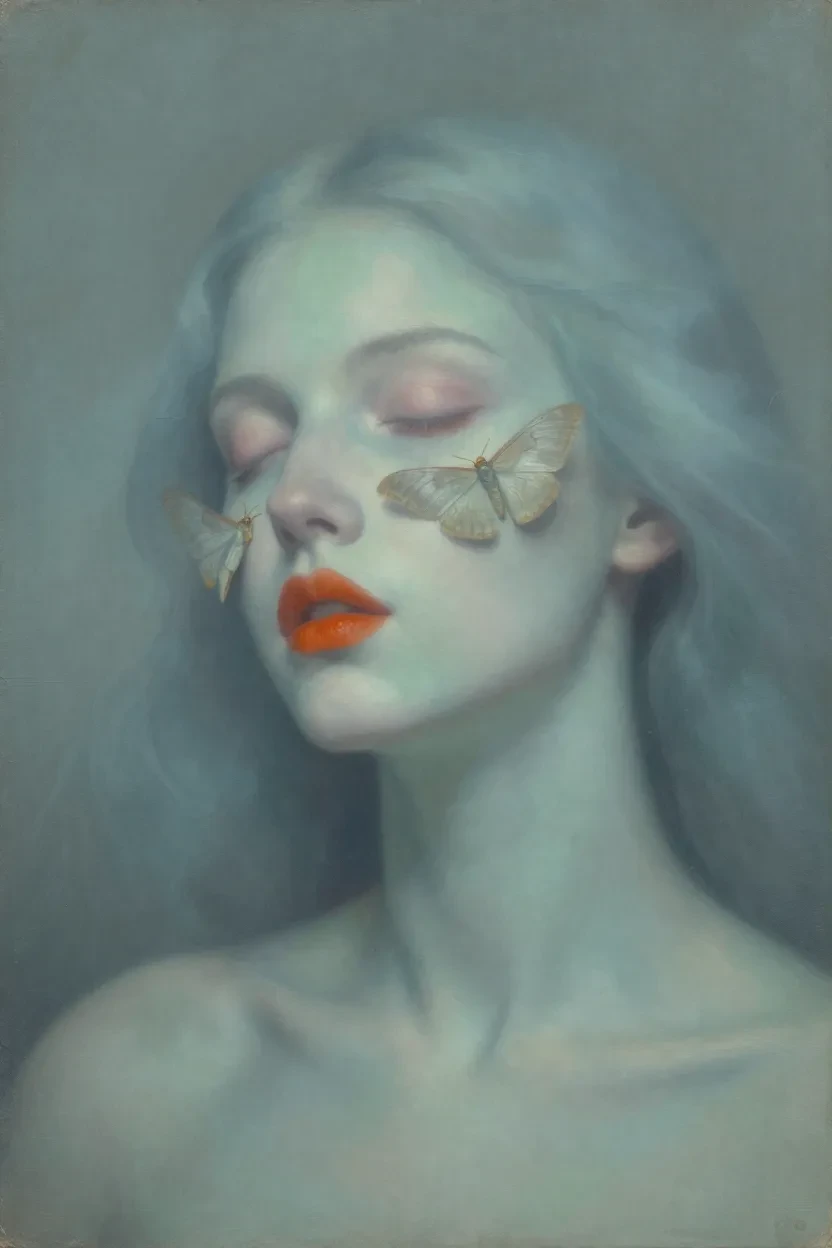
Moth Sermon
The Cartographer
Root Mother
Salt Mirror
Feather Ledger
Second Skin
Keyhole Throat
Coral Lung
Thread & Needle
The Drowned Bloom
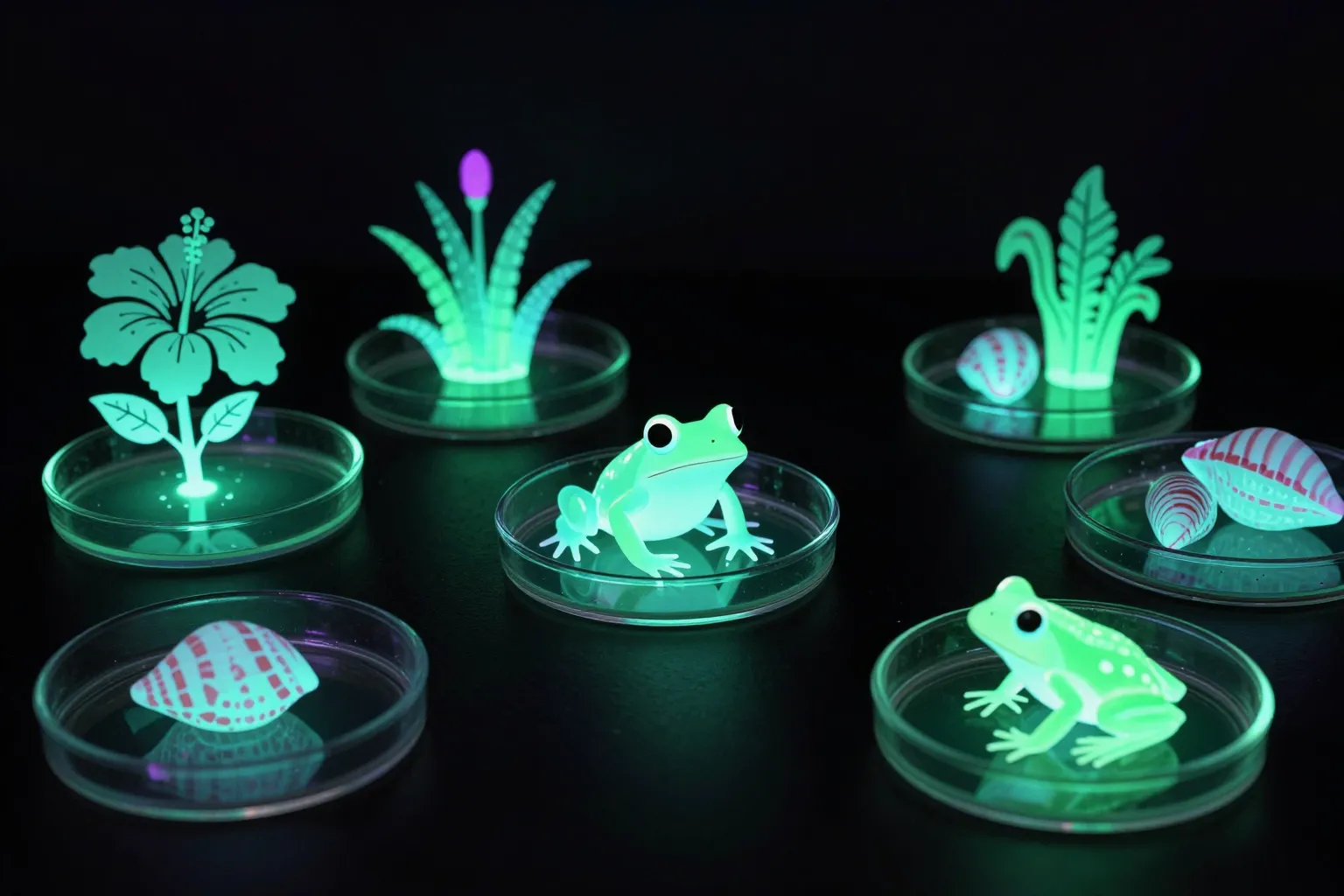
Hibiscus Strain
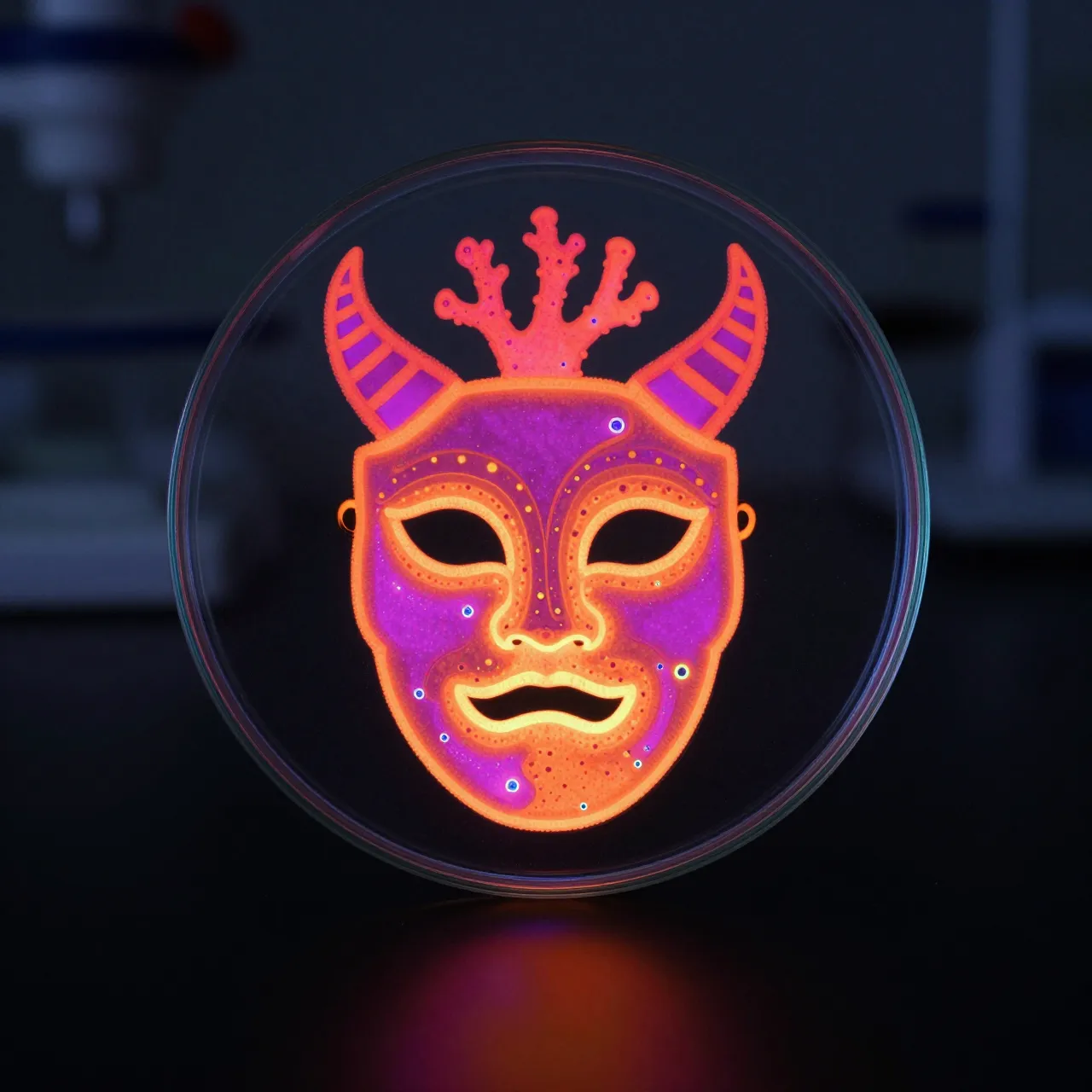
Coquí Sample
Vejigante Colony
Cowrie Growth
Isla Specimen
Flamboyán Bloom
Clave Frequency
Azulejo Division
Braid Medium
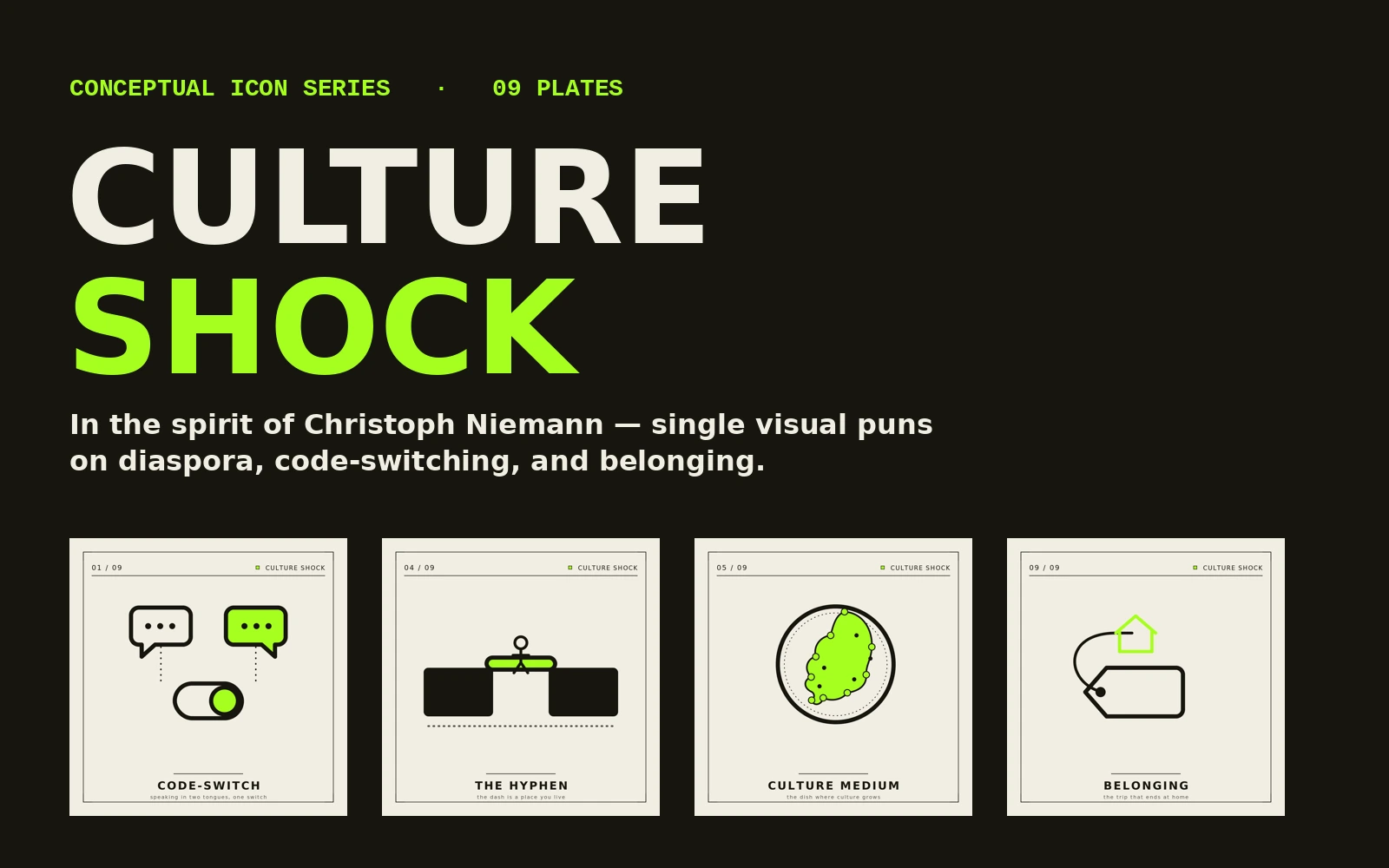
Petroglyph Culture



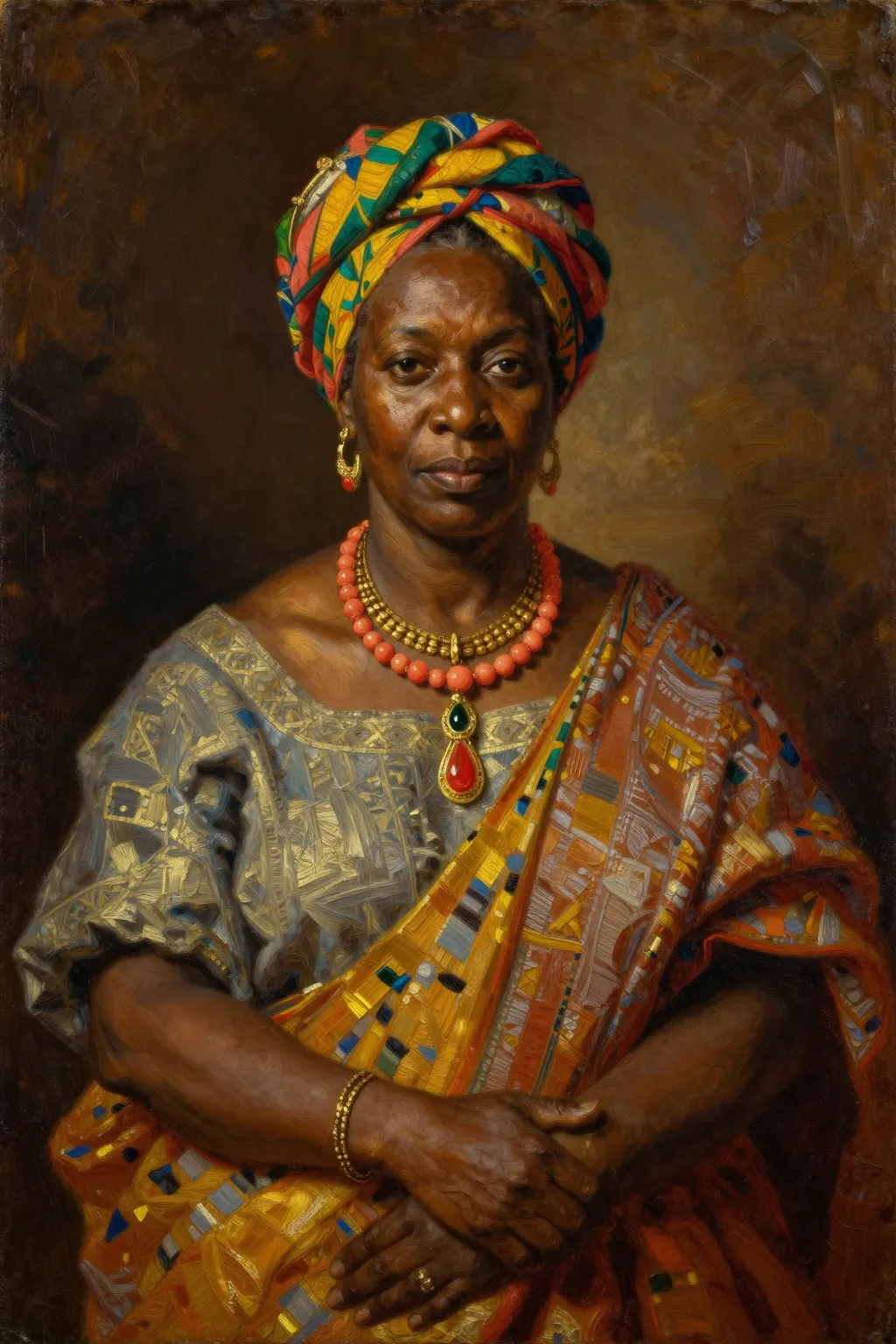
Caribbean Masters is a portrait cycle and a research project at once — a study of Afro-Caribbean and Afro-Latin faces and the cultural memory they carry. Working from history and family alike, and drawing on island folklore and diaspora, I render each subject with the gravity and care usually reserved for old-master portraiture. The aim is recognition: to place Afro-Caribbean and Afro-Latin identity at the center of the frame, painted with the depth and dignity of a canon that too often left it out.
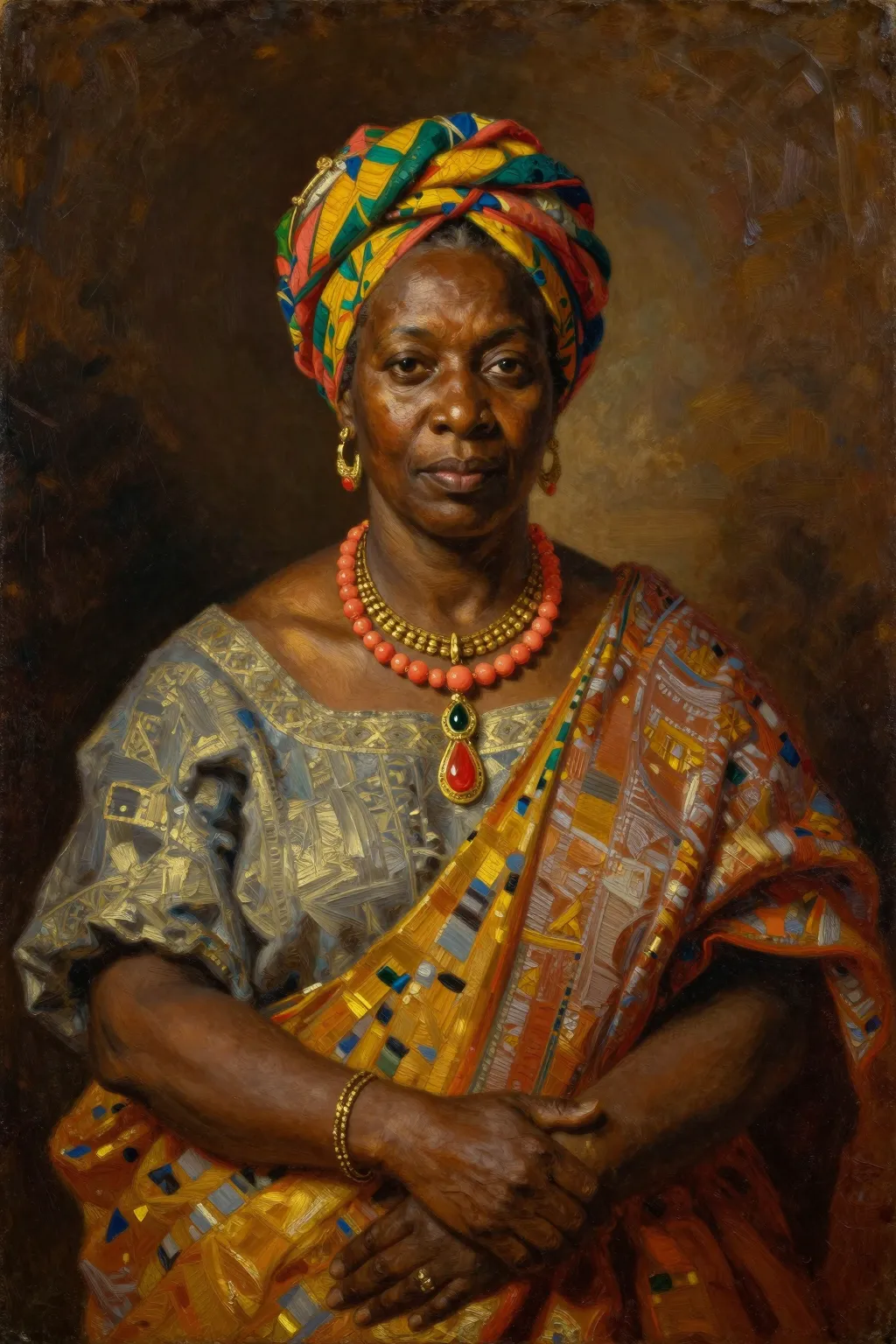
La Matriarca
El Pescador
La Santera
El Tamborero
El Cuentero
El Jíbaro
La Bailadora
El Poeta
La Florecida
El Guacamayo
Selected works
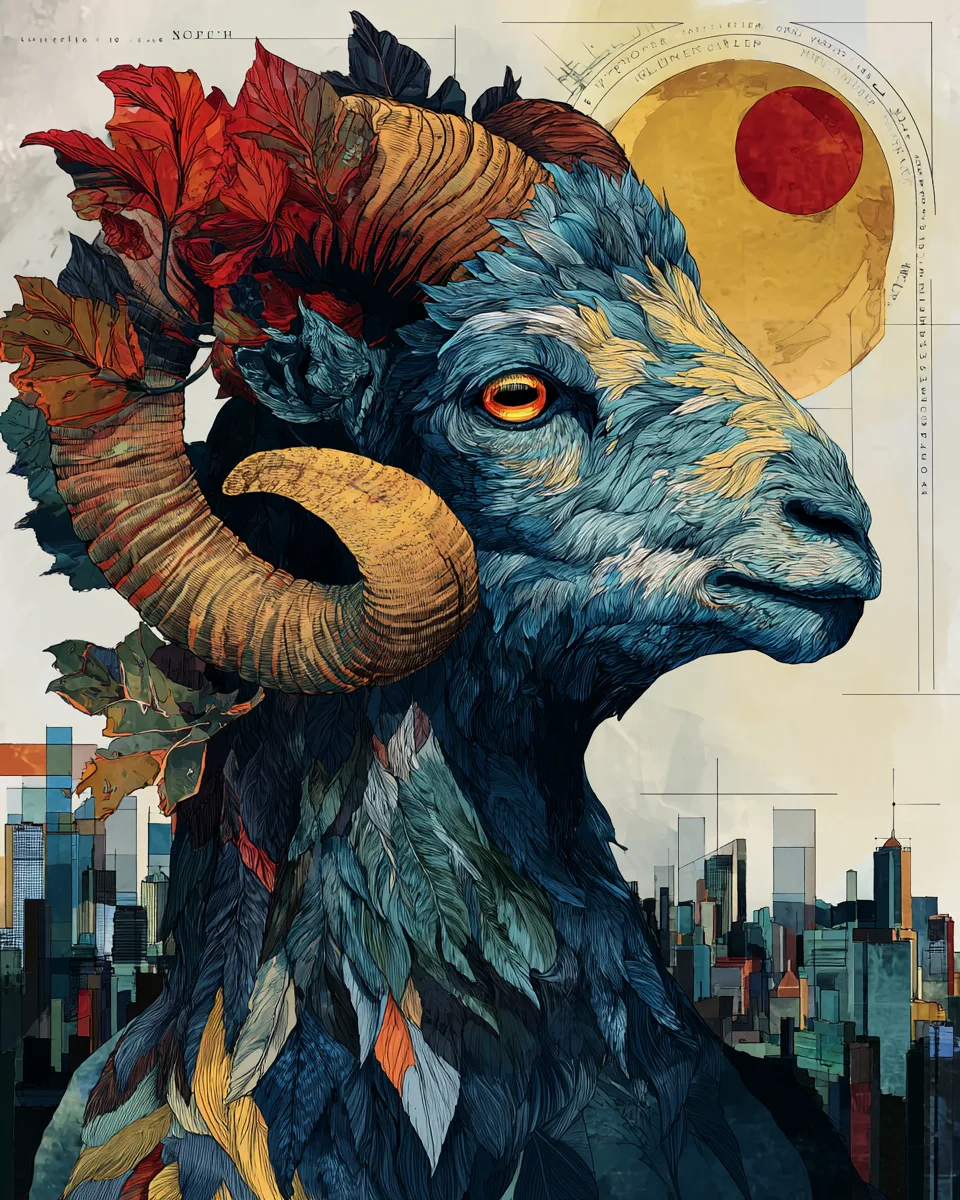
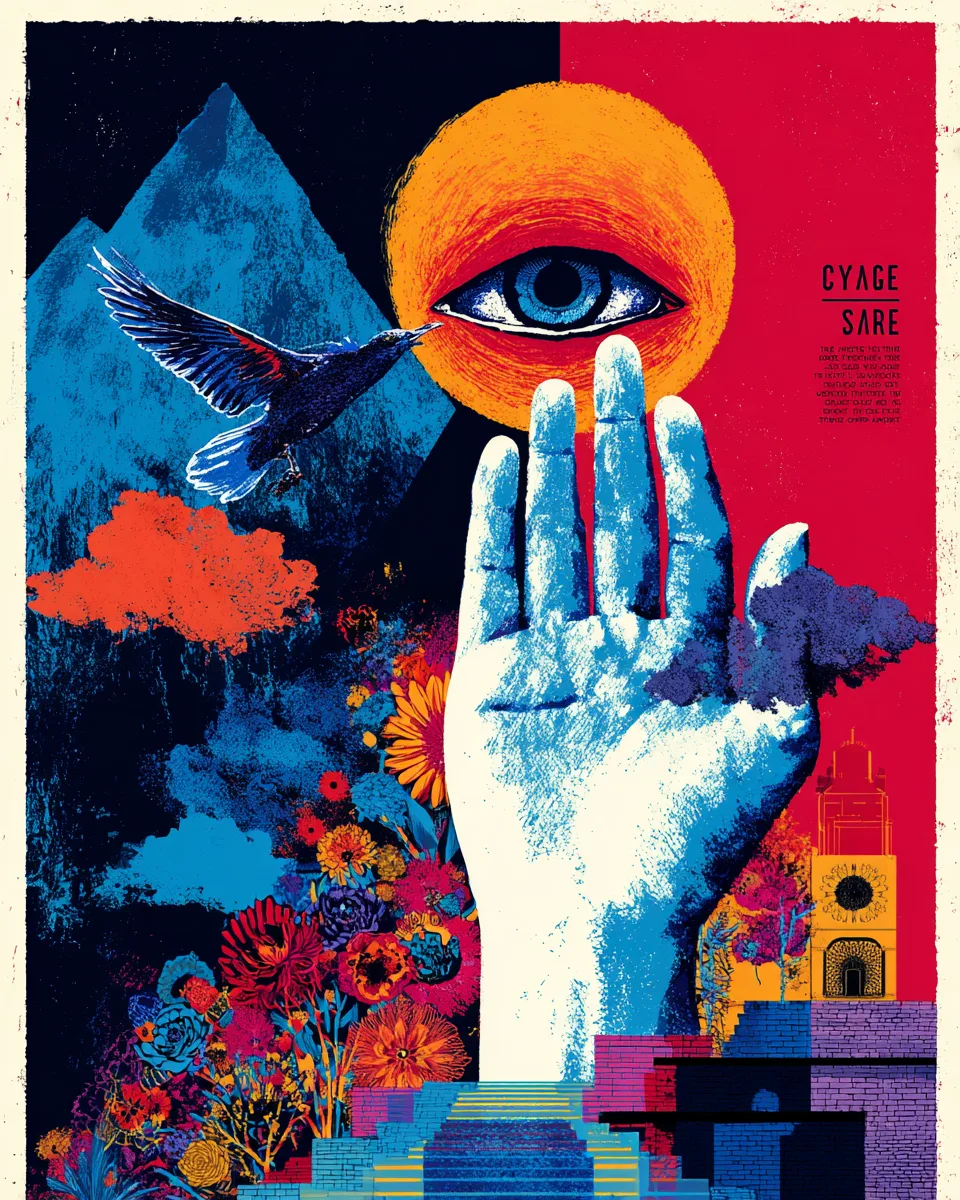
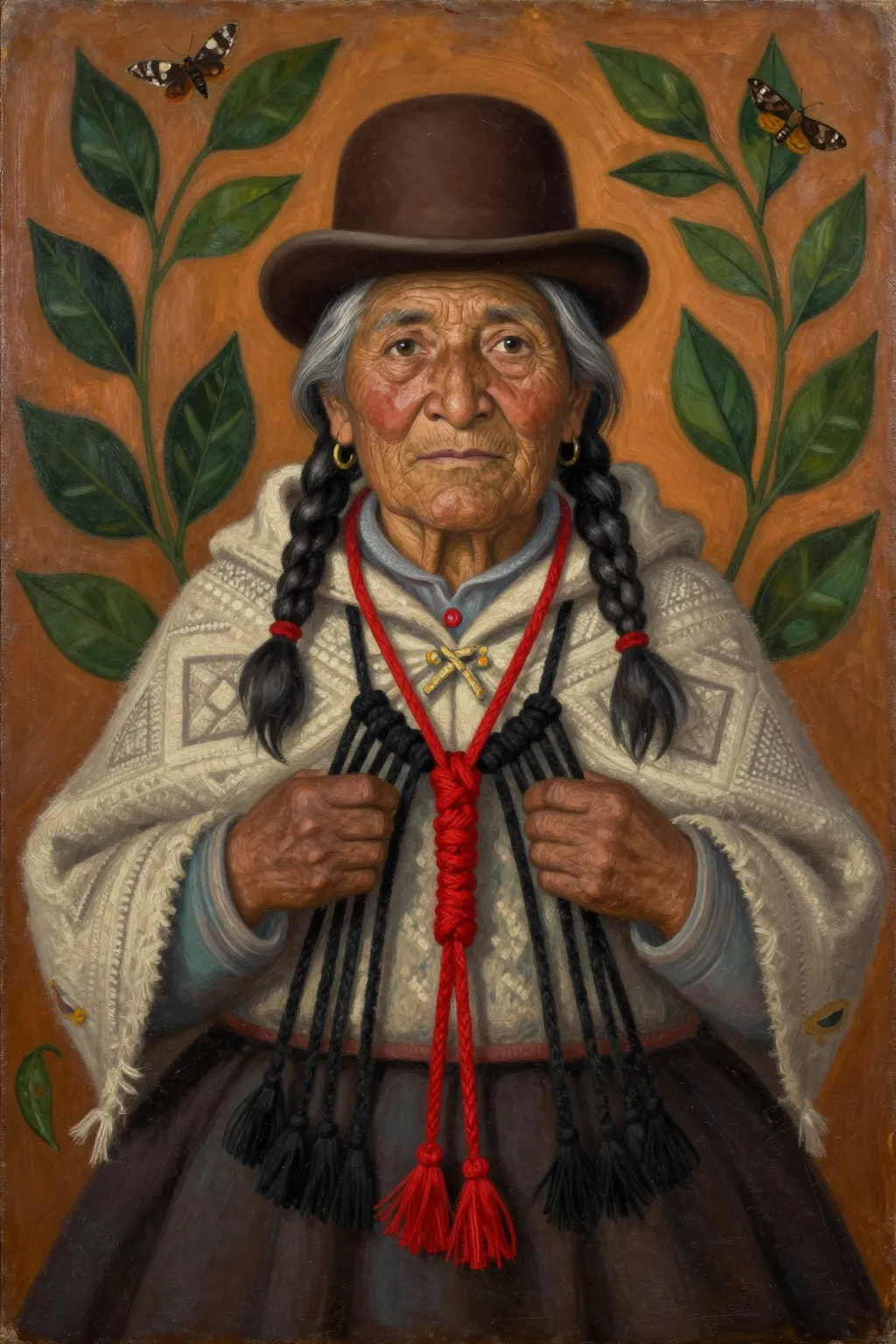
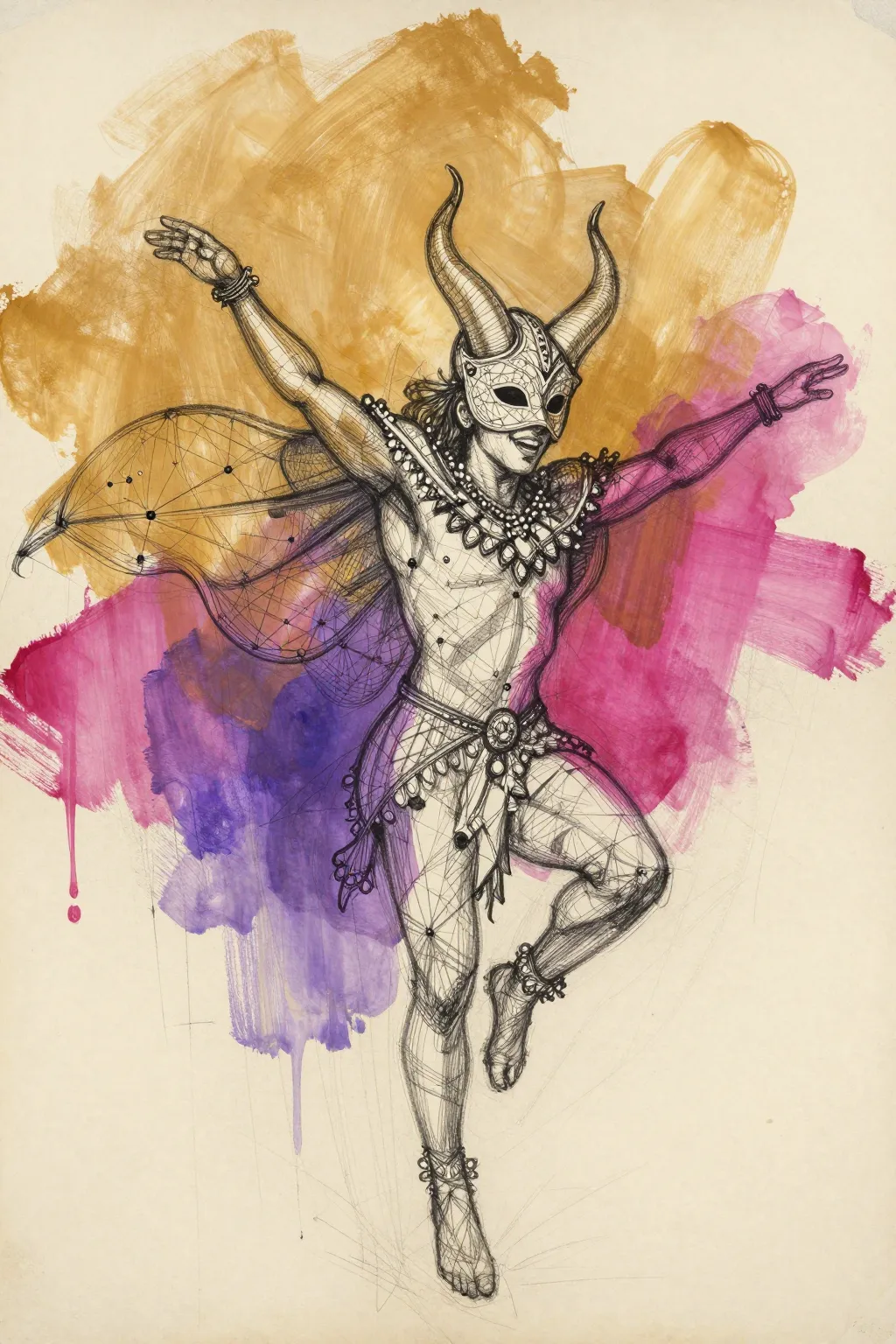
Through watercolor, oil, acrylic, textile motifs, collage, and digital transparencies, I construct images that are metaphors for inheritance and repair — transforming displacement into belonging, and vulnerability into power.
Two campaigns where the painting came first and the brand followed the creature.
Studio enquiriesstudio@lolimari.com