Selected Work / Litigation, made legible
Litigation, made legible
Turning dense legal argument into decision-ready story.
Maxim Legal LLC · New York / Paris · 2005–2008
Role
Senior Designer & Creative Lead
Scope
Courtroom visual systems & trial graphics
Outcome
Persuasive narratives supporting live litigation
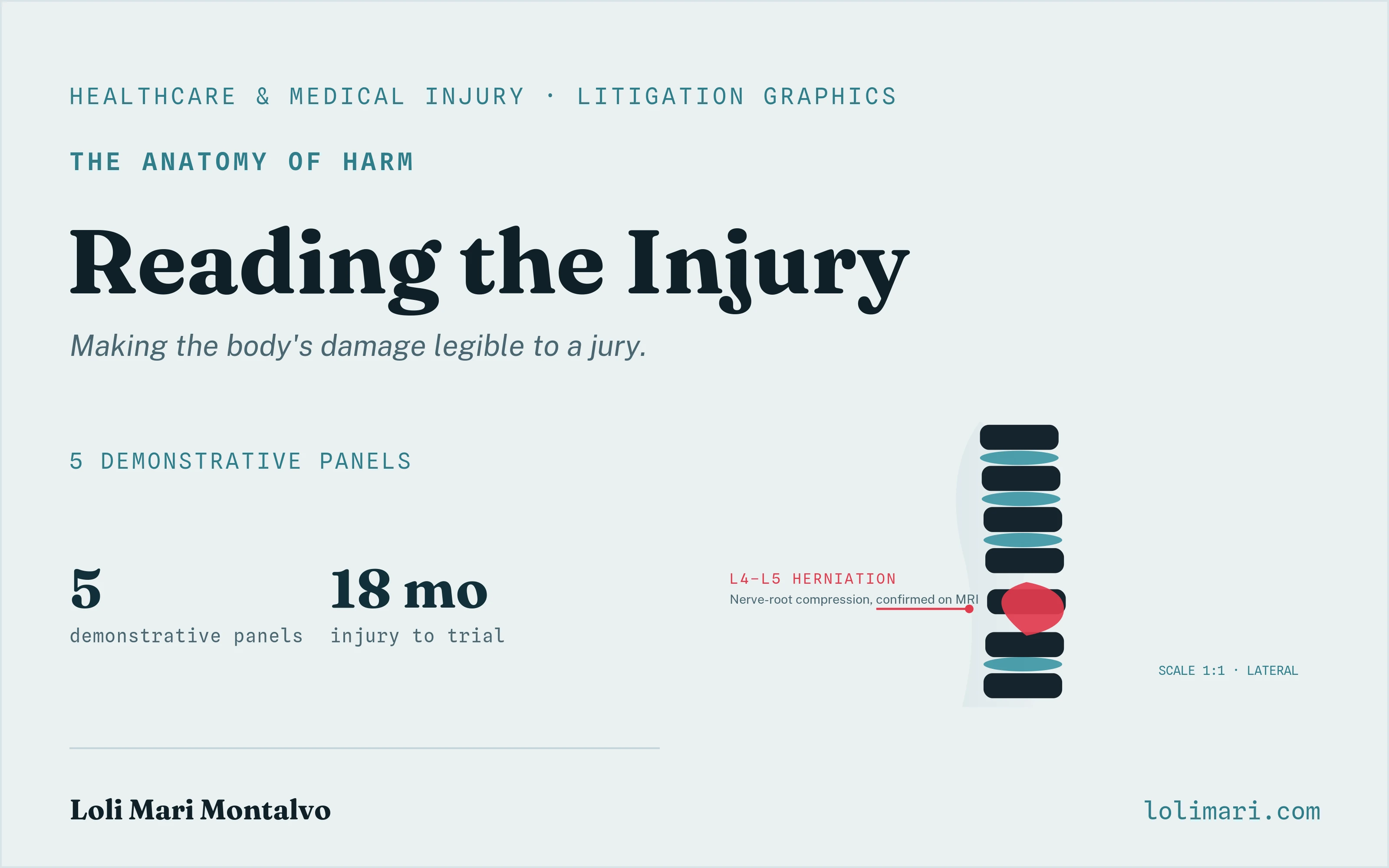
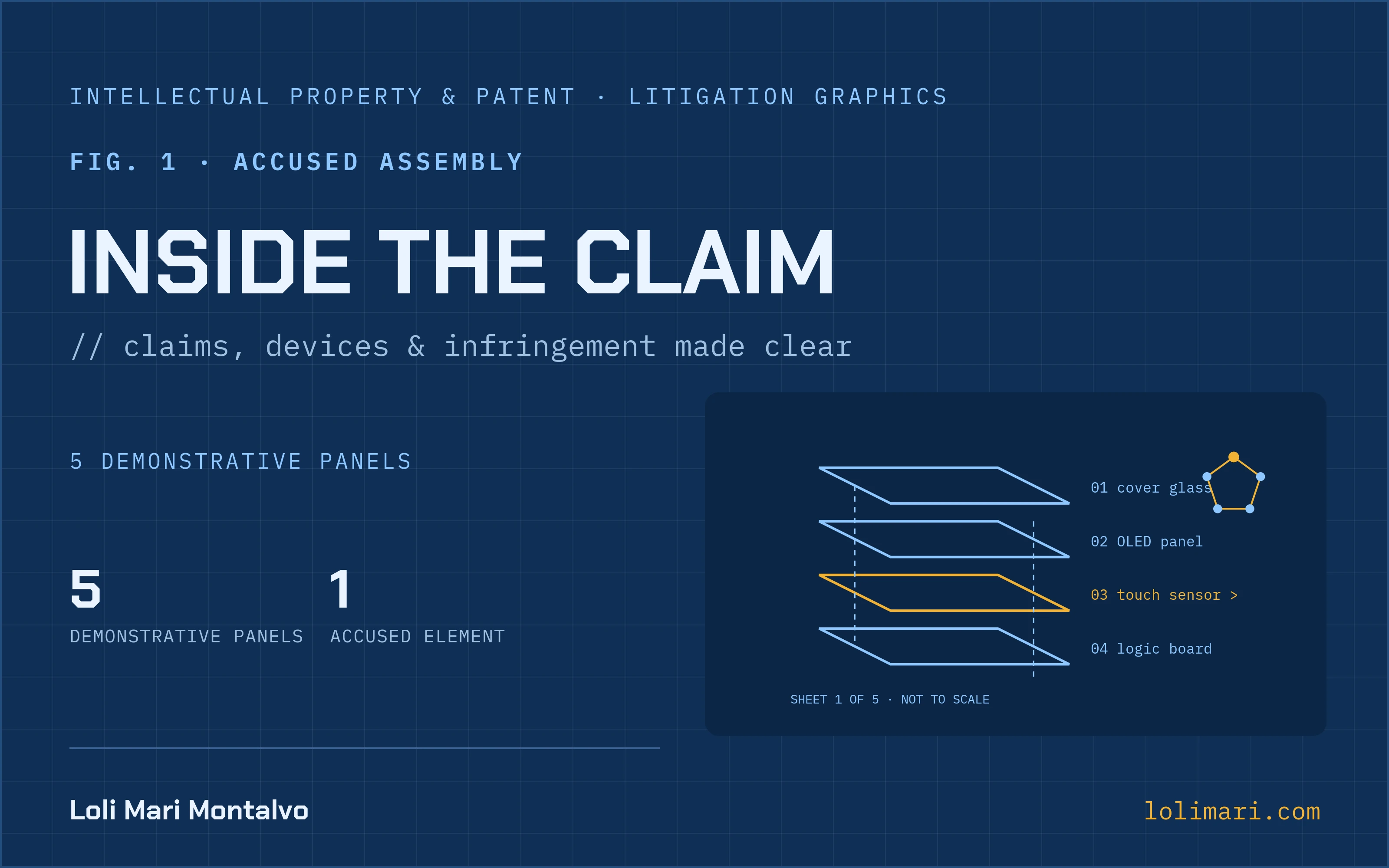
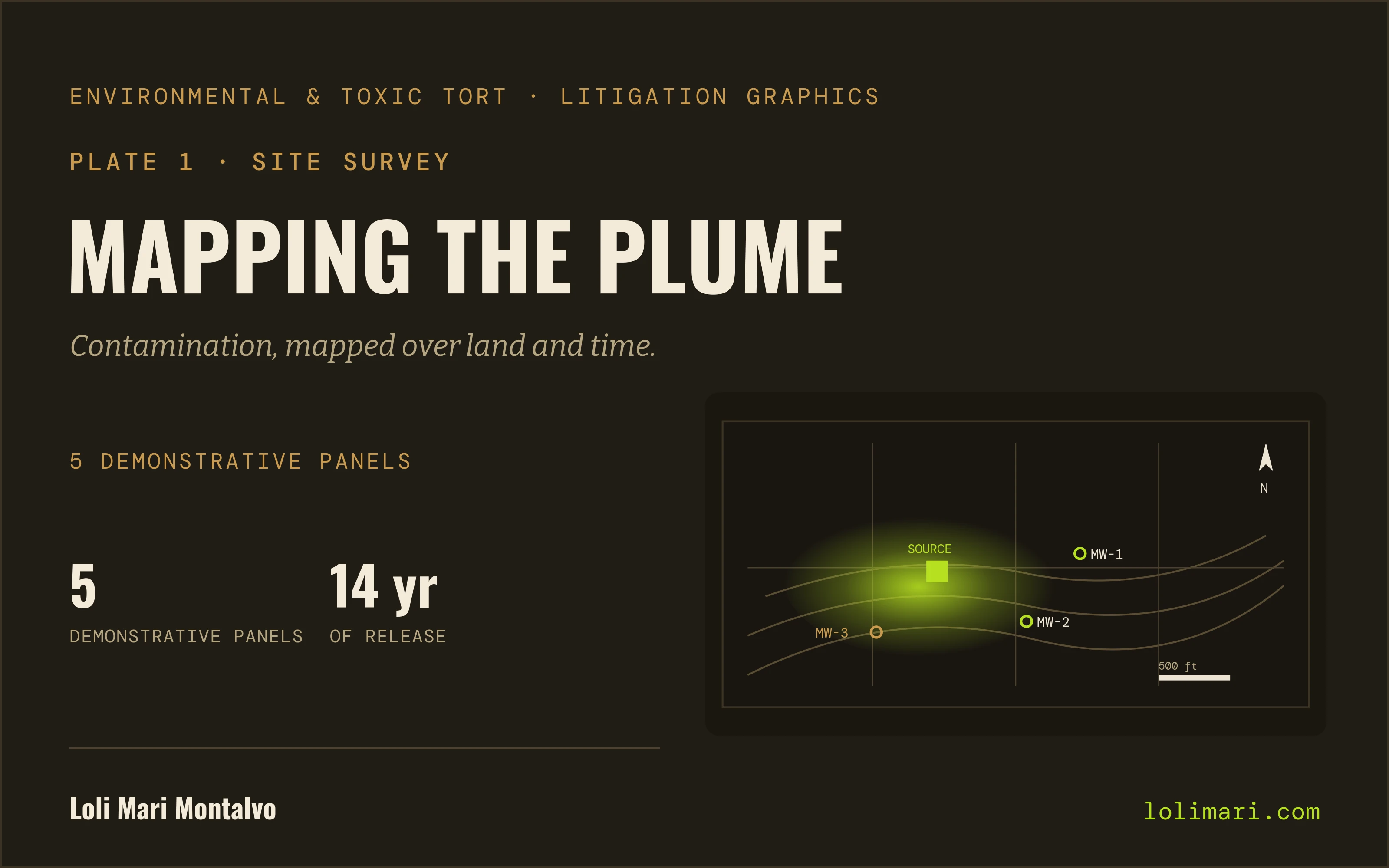


Challenge
Complex legal cases live or die on whether a judge and jury can follow the argument. Attorneys had technical, document-heavy material and limited time to make it land. The work had to be rigorously accurate and immediately persuasive — no room for confusion or embellishment.
Opportunity
Most trial graphics were treated as decoration applied after the legal thinking was done. I saw them as the argument itself — a chance to design the sequence of understanding, so each exhibit moved a viewer one clear step closer to the conclusion.
Strategy
Treat each case as a narrative system: a consistent visual language for evidence, timelines, and relationships that reduced cognitive load and built toward the attorney's thesis. Partner with counsel early so design shaped strategy, not just illustrated it.
Process
Worked directly with attorneys to map the argument, then produced courtroom-ready graphics in Adobe Creative Suite, PowerPoint, and illustration tools. Iterated against the litigation strategy, and trained other designers in the production standards so the studio could scale this work reliably.
Creative Direction
Held a strict hierarchy — one idea per exhibit, accurate but legible typography, restrained color used only to direct attention. The discipline was knowing what to leave out.
Outcome
Produced trial graphics that translated technical and legal information into clear, persuasive presentations supporting active litigation — and built team capability through hands-on instruction.
Lessons learned
When the stakes are highest, clarity is the most creative act. I still design for the sequence of understanding first.
Next case study
Two Ledgers →