Selected Work / Teaching machines to make art
Teaching machines to make art
An AI-integrated creative workflow, built and taught.
Self-directed creative R&D · 2024–2026
Role
Creative Director & Artist
Scope
End-to-end AI-assisted creative pipeline + curriculum
Outcome
Coherent bodies of work and a teachable method
Challenge
AI image tools are easy to start with and hard to make good with. Output drifts toward generic sameness, and most creatives either dismiss the tools or get flattened by them. The challenge: produce work that still carries authorship, craft, and cultural meaning — and make the method teachable.
Opportunity
An artist's intention is exactly what AI lacks. By bringing 25 years of compositional judgment and a clear cultural point of view to the tools, I could direct them toward a signature visual language instead of accepting their defaults — and turn that discipline into a curriculum.
Strategy
Treat AI as one medium in a larger pipeline: concept and cultural research first, AI generation as exploration, then traditional craft and finishing to bring the work up to exhibition standard. Codify each step so students could follow it.
Process
Developed series-based bodies of work, iterating prompts against a defined aesthetic, then refining selected outputs through enhancement, retouching, and color direction — documenting the decisions at each stage to build AI-literacy teaching material.
Creative Direction
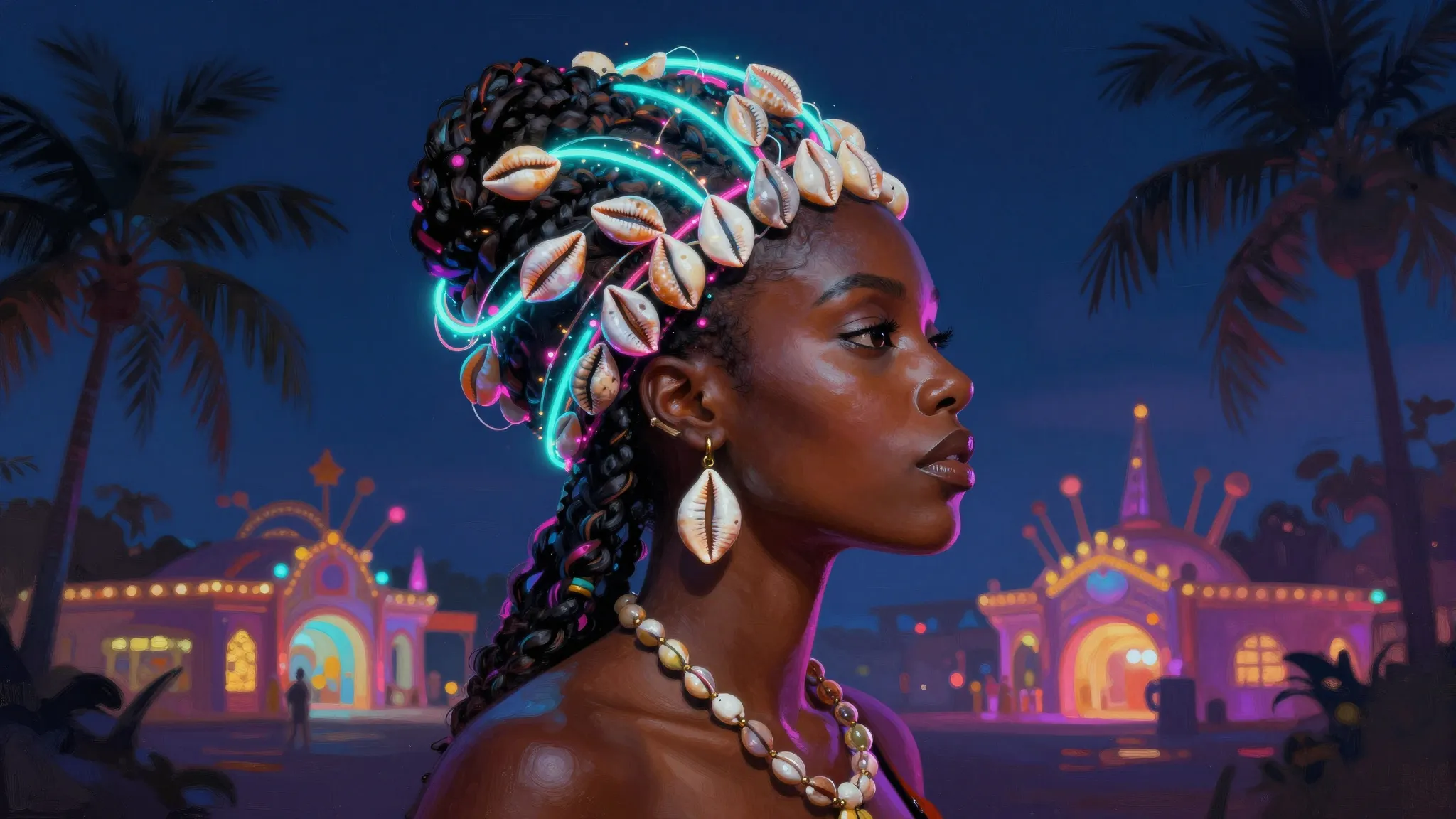
Owned the through-line — the neon/cyberpunk palette, the Afro-Caribbean and Afrofuturist motifs, the compositional rigor — so a viewer can tell the work is hers, not the model's.
Outcome
Produced multiple coherent, recent series and a repeatable, teachable workflow that demonstrates fluent, critical, craft-led AI practice — a genuine 2026 differentiator.
Lessons learned
The tool doesn't have taste; you do. AI rewards the director who knows exactly what they're reaching for.
Next case study
A generative art series →